Back to Mobility and Accessibility
Aging in the neighborhood
Walking slowly, seven in ten older people have the clinic more than fifteen minutes away; the food store and the square are close.
Aging in the neighborhood · Chile · How many older people live far from the clinic, the pharmacy and the food store?
Staying in one's own neighborhood depends on having the clinic, the pharmacy, the food store and a square nearby. We measured it block by block in Chile's three largest metropolitan areas, at a normal pace and walking slowly, and also uphill, because on the hills fifteen minutes cover less ground.
Read the technical noteThe first two pages, online. The full note is sent by email on request.
What we found
Food stores and squares are close; the clinic and the pharmacy are far
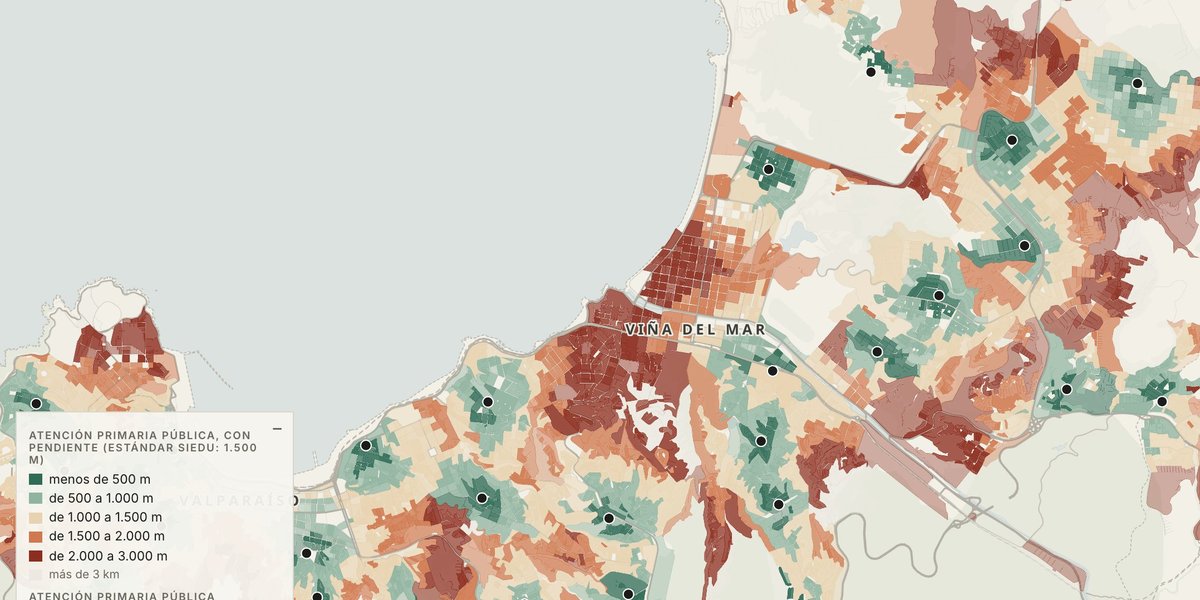
Within fifteen minutes at a normal pace, 40.1% of people aged 60 or over have no public primary care and 24.5% no pharmacy; 5.0% have no food store and 1.7% no square. Walking slowly, the clinic is more than fifteen minutes away for seven in ten (71.6%). The primary care network is organized in areas of tens of thousands of registered patients: what can reach the neighborhood is part of the care, such as home visits or health rounds at the neighborhood hall.
The clinic is close to people with less schooling; the pharmacy, to those with more
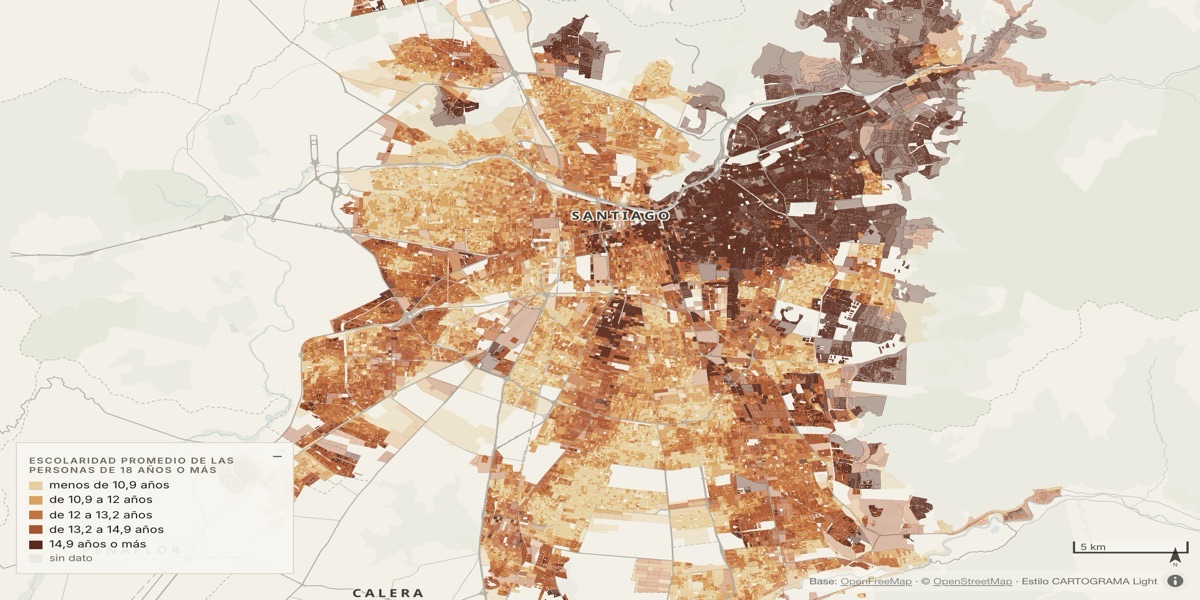
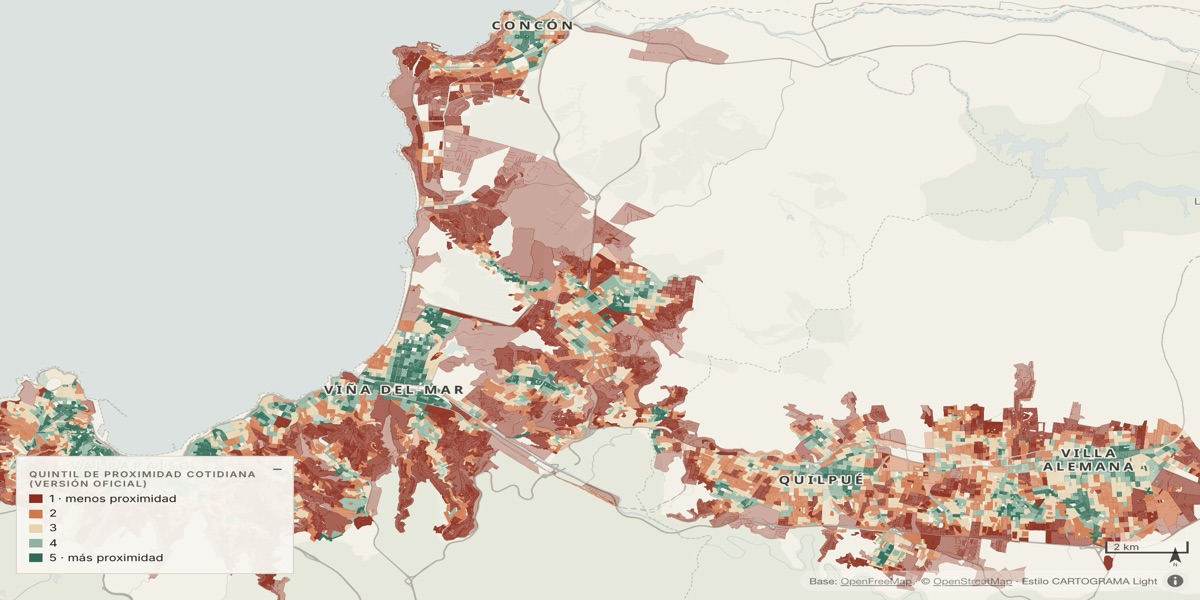
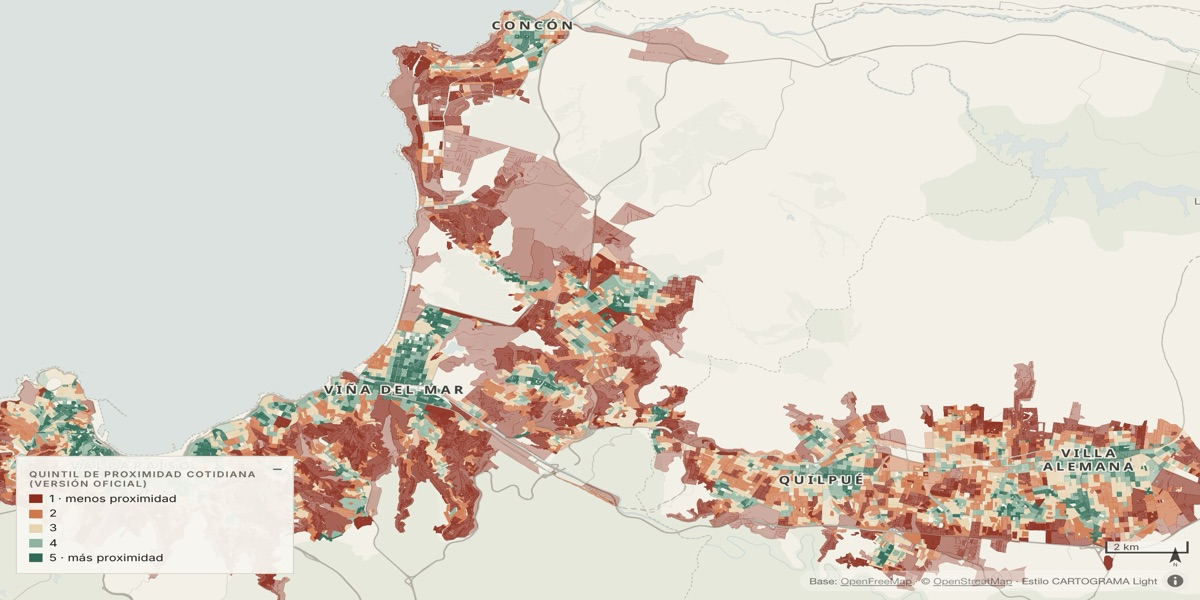
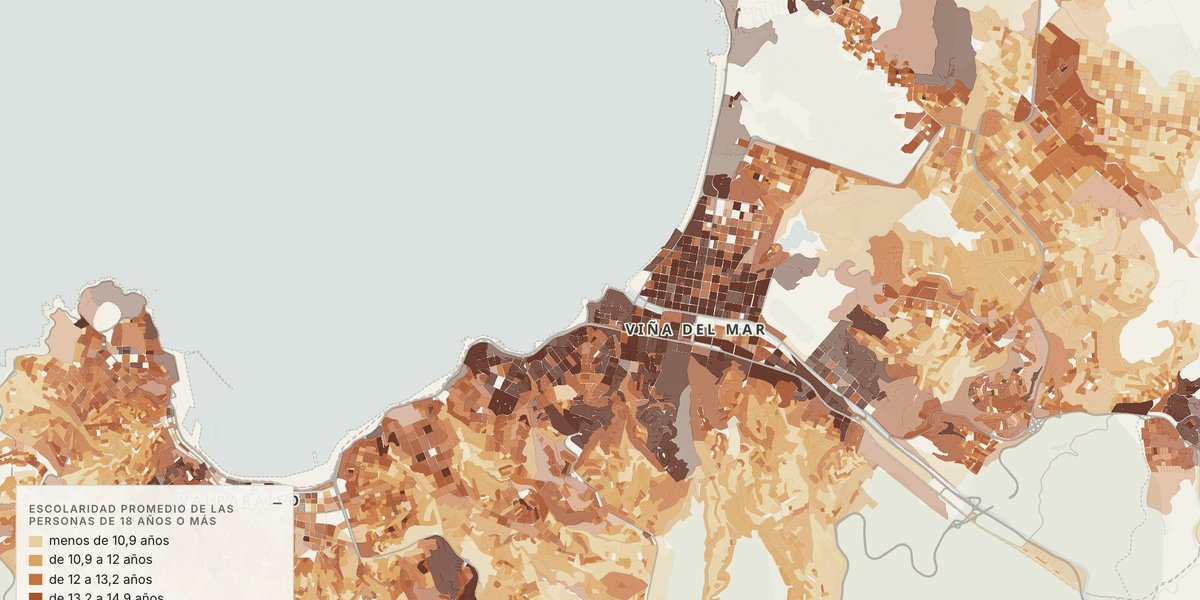
In Greater Santiago, in the quintile with the least schooling 15.0% of older people have no public primary care within 1,200 m, and in the quintile with the most, 68.7%. The pharmacy shows the opposite: 27.5% and 8.2%. The clinic follows the population registered with FONASA and hands out its patients' medicines at its own dispensary; private pharmacies follow purchasing power. In Greater Valparaíso, both are far from people with less schooling: 50.9% have no clinic and 84.4% no pharmacy within 1,200 m.
The oldest blocks have the clinic as far away as the youngest
Where 32% or more of residents are aged 60 or over, 74.9% of older people have no clinic within 750 m; in the youngest blocks, 74.4%, and in the intermediate ones, between 67.8% and 71.5%. Finding the people whose clinic is far requires measuring the distance of every block and counting its older people.
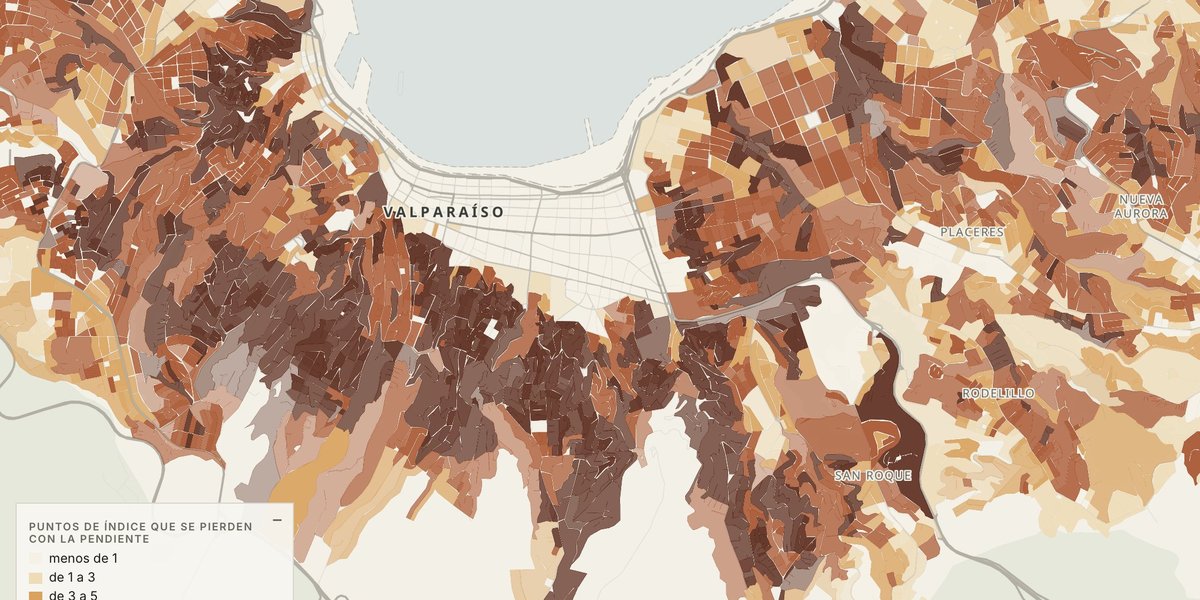
On the hills of Valparaíso, the slope pushes the clinic away
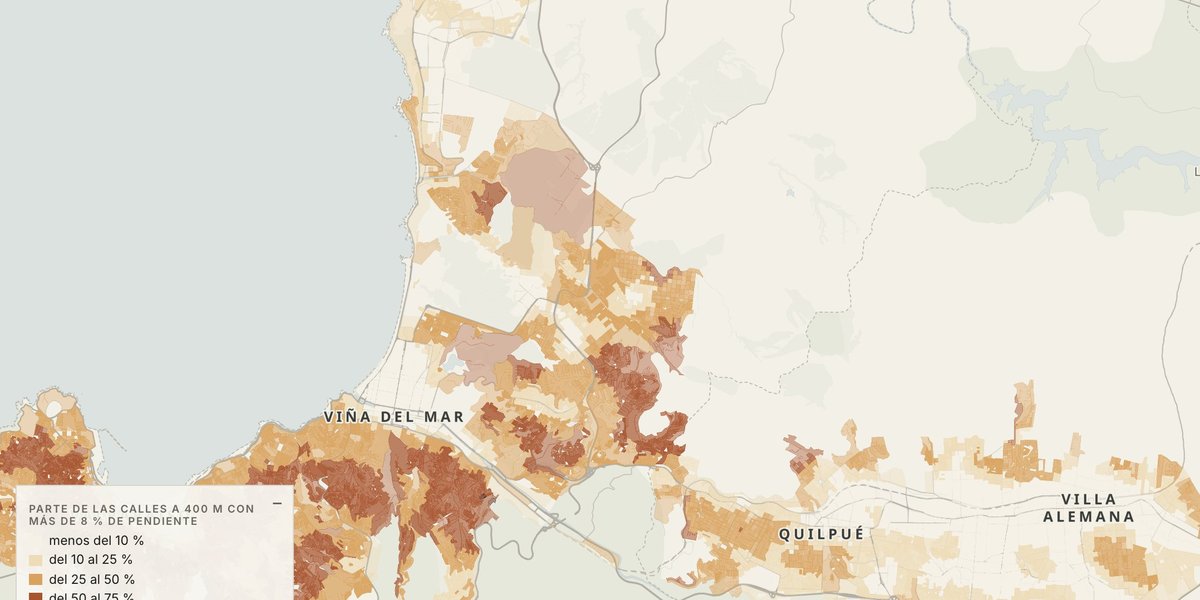
With the slope, 55.2% of people aged 60 or over in Greater Valparaíso have no public primary care within 1,200 m, against 47.3% on flat ground: 16,418 more older people. In the comuna of Valparaíso, the figure rises from 34.8% to 52.5%. In Greater Santiago and Greater Concepción, the difference is under a point and a half.
Greater Concepción: the pharmacy, farther than the clinic
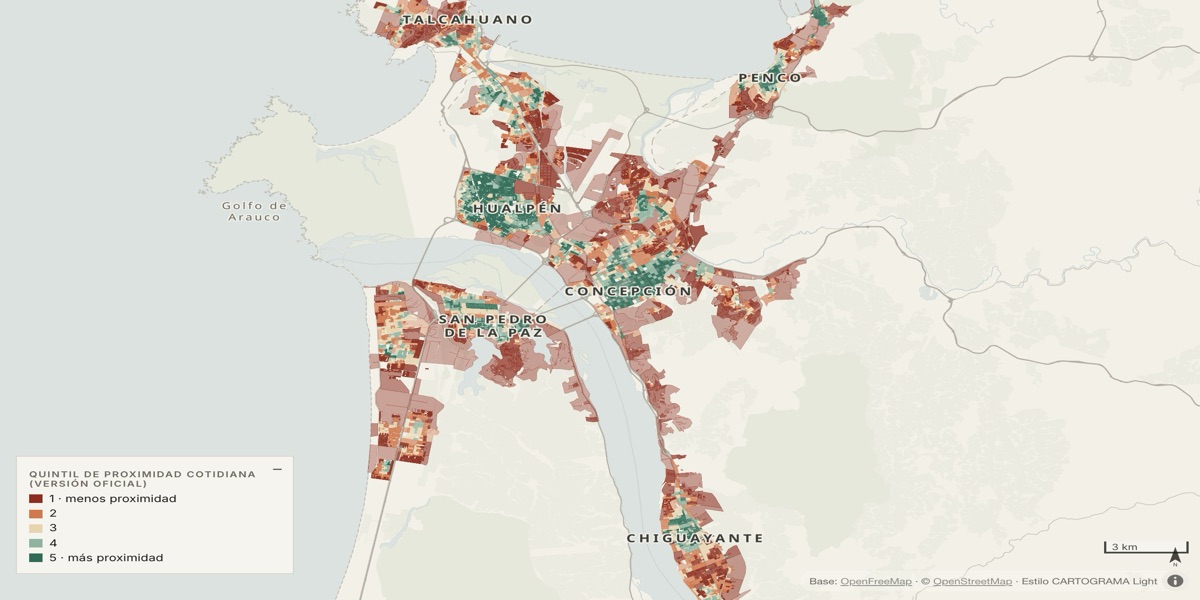
It is the only one of the three cities where more people aged 60 or over lack a pharmacy within 1,200 m (53.6%) than a clinic (46.1%).
See it on the map
What we recommend
Bring part of primary care to the neighborhoods where the clinic is more than 1,200 m away: rounds at neighborhood halls, home visits and home delivery of medicines for registered older patients. On the hills of Valparaíso and Viña del Mar, prioritize by the distance with slope and by the number of older people in every block, not by their share.
The food store and the square hold up; the clinic is the first thing to leave the neighborhood when walking slowly or uphill.
Street distance from every block to the clinic, the pharmacy, the food store and the square, at the pace of older people and with the slope · Greater Santiago, Greater Valparaíso and Greater Concepción, Chile · 2026
Facing a similar problem?
We can run this analysis for your city, with your data and your question.
Relevant for
- Mobility and planning departments
- Road-safety and school-mobility programs
- Care and social-development programs
- International organizations and funders
We also
Related projects