Back to Mobility and Accessibility
The stop is close; the bus, not always
Half of the people have a stop within 203 m, but 304,744 wait more than 15 minutes at rush hour.
How Far Is the Bus? · Bogotá · How far away is the bus, and how often does it come?
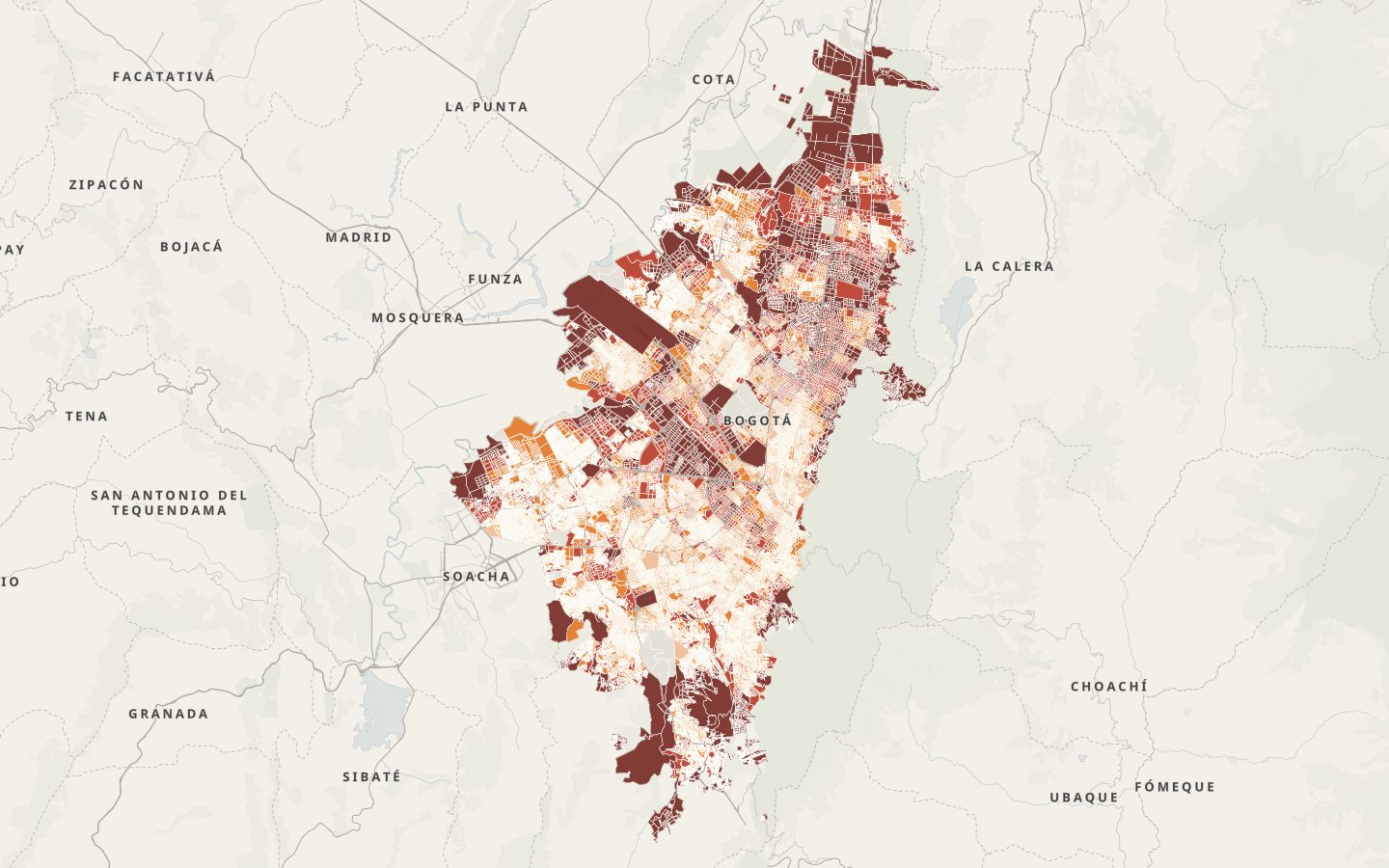
Half of the people in Bogotá live less than 203 m from a stop with service, and where there is a stop, buses come often. But 256,985 people have no stop within 500 m, and 304,744 have service less often than every 15 minutes at rush hour.
Read the technical noteThe first two pages, online. The full note is sent by email on request.
The problem
Distance to the stop tells only half the story: a bus that comes every half hour is not as useful as one every five minutes. Measuring both for each person shows where public transit is a real option.
What we found
Almost everyone has a bus stop nearby
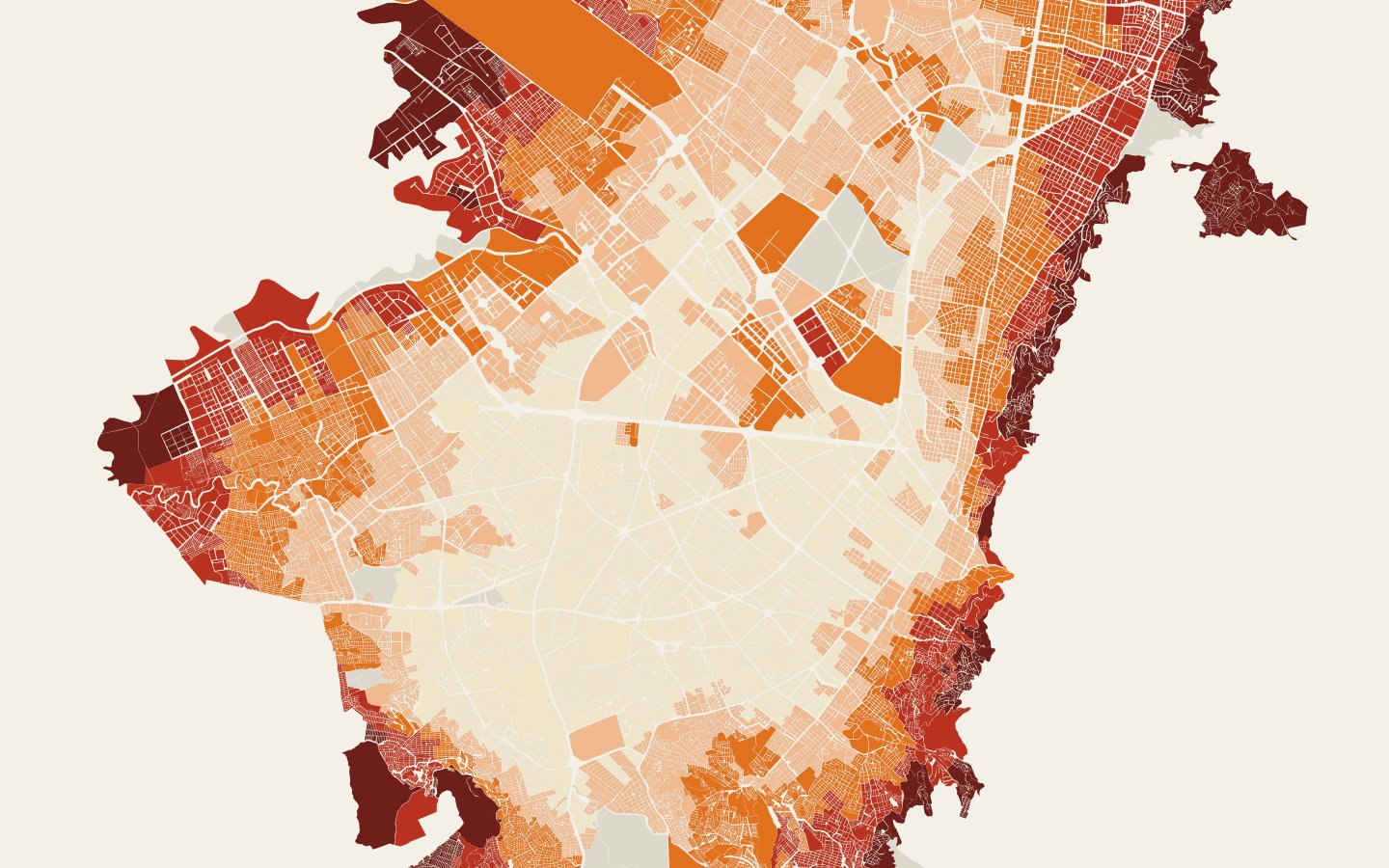
Half of the people live less than 203 m on foot from a stop with service. 22.1% live more than 300 m away, and only 3.6% more than 500 m.
Where there is a stop, the bus comes often
For the person in the middle of the distribution, the most frequent line near home comes every 5.2 minutes at rush hour and every 6.7 minutes off-peak. For most people, waiting is not the problem.
Where the bus comes rarely is in the north and the expanded center, not in the south
The highest shares of people whose bus comes less often than every 15 minutes are in Barrios Unidos (18.2%), Usaquén (11.0%) and Chapinero (10.1%). In number of people, the largest gap is in Suba, with 95,462. In Bosa, Kennedy, Usme and Ciudad Bolívar the share is below 4%.
The trunk line is far for most people: everyday service comes from the zonal system
79.9% of the people live more than 1 km from a TransMilenio trunk station. What puts a stop nearby and a frequent bus across almost the whole city is the zonal system, which runs through neighborhood streets.
The gap follows proximity
In the lowest-proximity quintile, 14.0% of people live more than 500 m from a stop and 15.3% have service less often than every 15 minutes; in the highest-proximity quintile, both figures are practically zero.
At midday, service drops on the hillsides
Between peak and off-peak, the median wait for the best line rises from 5.2 to 6.7 minutes. In Chapinero the share with sparse service rises from 10.1% to 16.6%, because of hillside routes that run mainly at peak.
Boarding takes twice as long in the distant city
The median person needs 3.0 minutes to board; in the lowest-proximity quintile, 4.4, and in the highest, 2.2.
See it on the map
What we recommend
Bring zonal routes into the gated complexes of the north, open pedestrian passages that shorten the detour to the stop and keep off-peak service on hillside routes.
In Bogotá the bus is close and frequent for almost everyone; the gaps are few, which is why they can be addressed one by one.
GTFS validation, frequencies by stop and hour, walking distance by city block · Bogotá, Colombia · 2026
Facing a similar problem?
We can run this analysis for your city, with your data and your question.
Relevant for
- Mobility and planning departments
- Road-safety and school-mobility programs
- Care and social-development programs
- International organizations and funders