Back to Mobility and Accessibility
Close to everything on the coast, far away at the edge
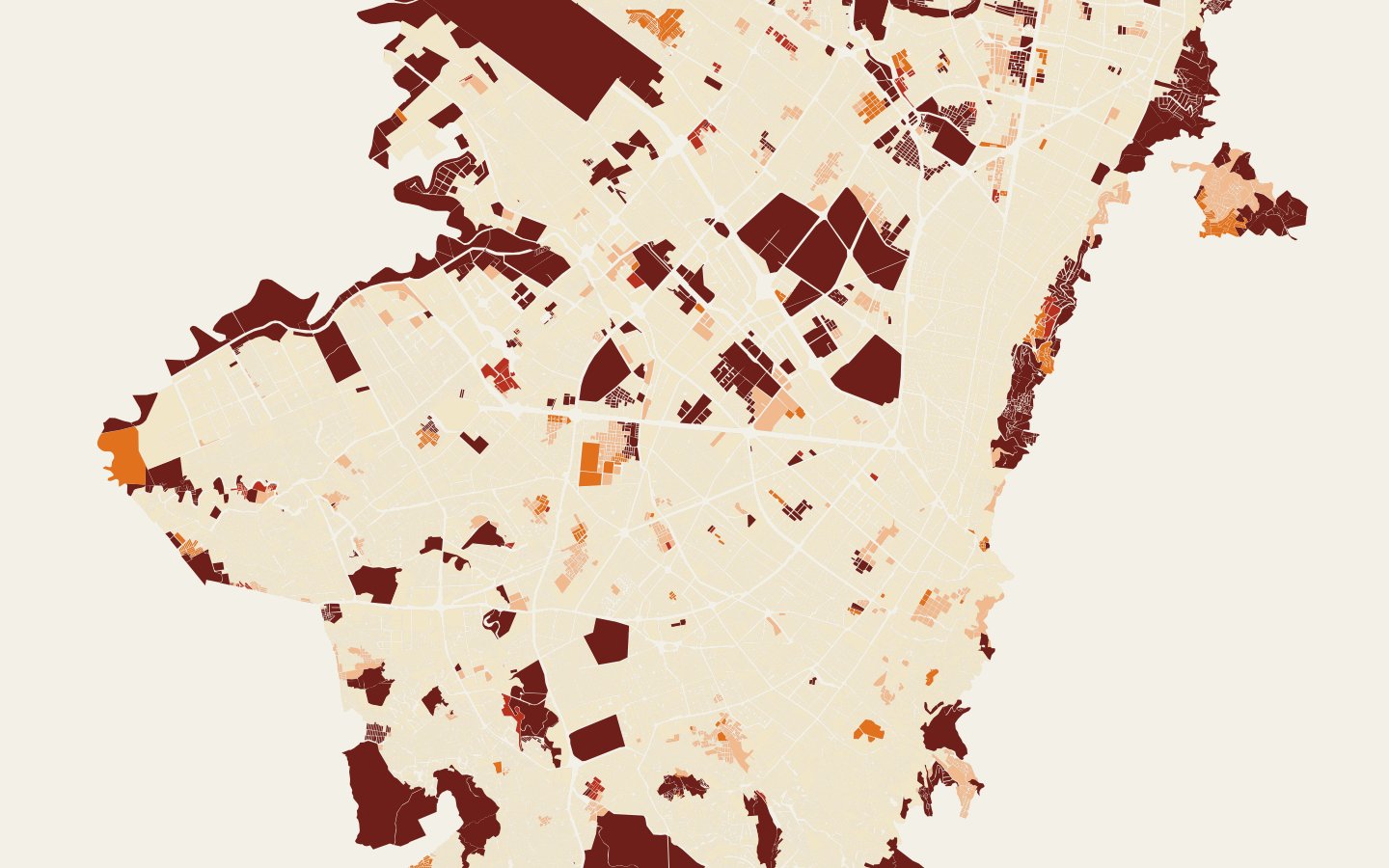
The index ranges from 70.4 in the Centro municipality to 34.7 in Maroñas; culture and health care are what is missing most.
How close is everyday life? · Montevideo · How close is everyday life on foot in each Montevideo neighborhood?
The Everyday Proximity Index applied to Montevideo, with the official street network and six functions: the Centro municipality scores 70.4 and Maroñas, 34.7. Culture is more than fifteen minutes away on foot for 39% of people and health care for 24%; buses come every few minutes in the center and almost never at the edge.
Read the technical noteThe first two pages, online. The full note is sent by email on request.
The problem
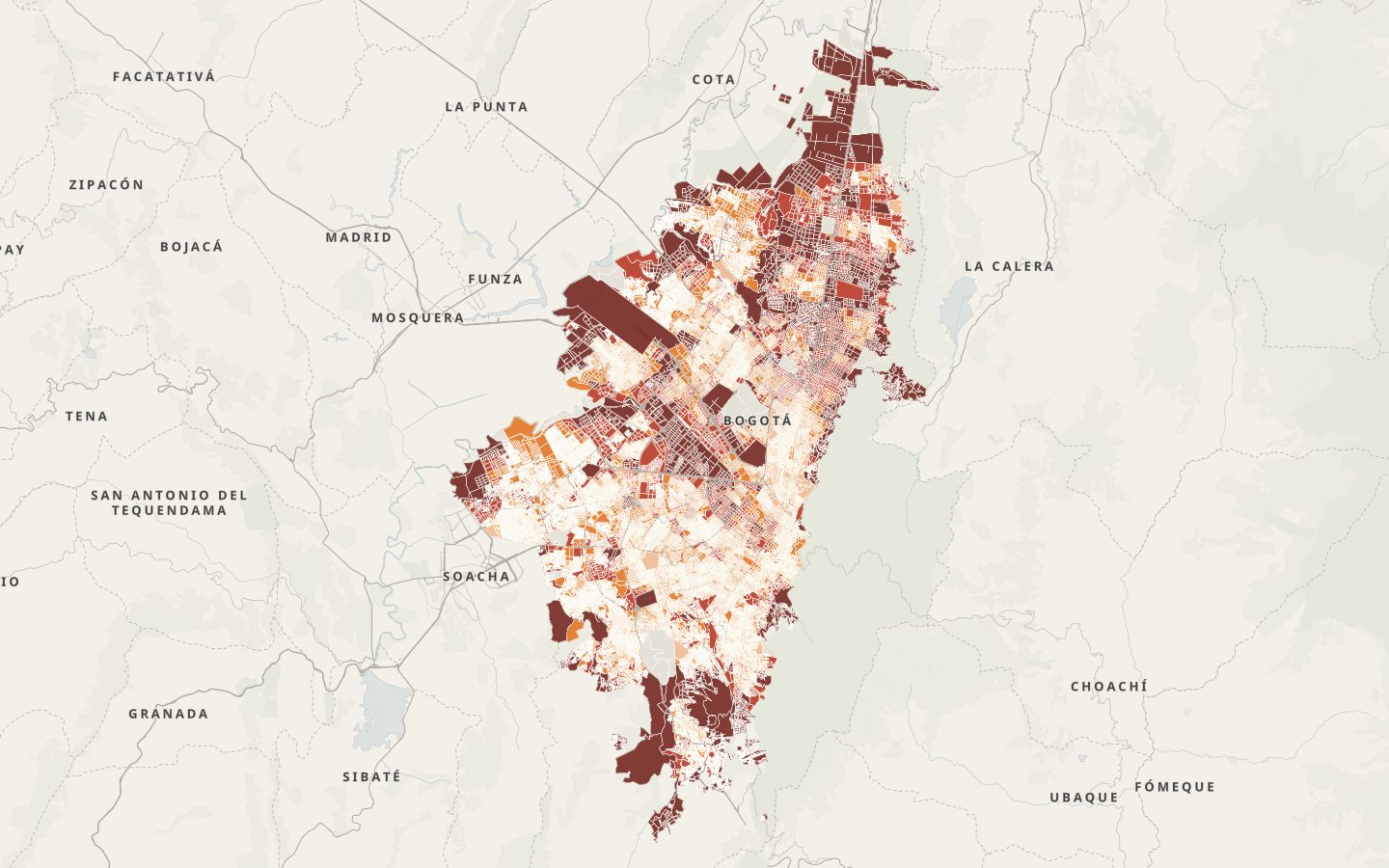
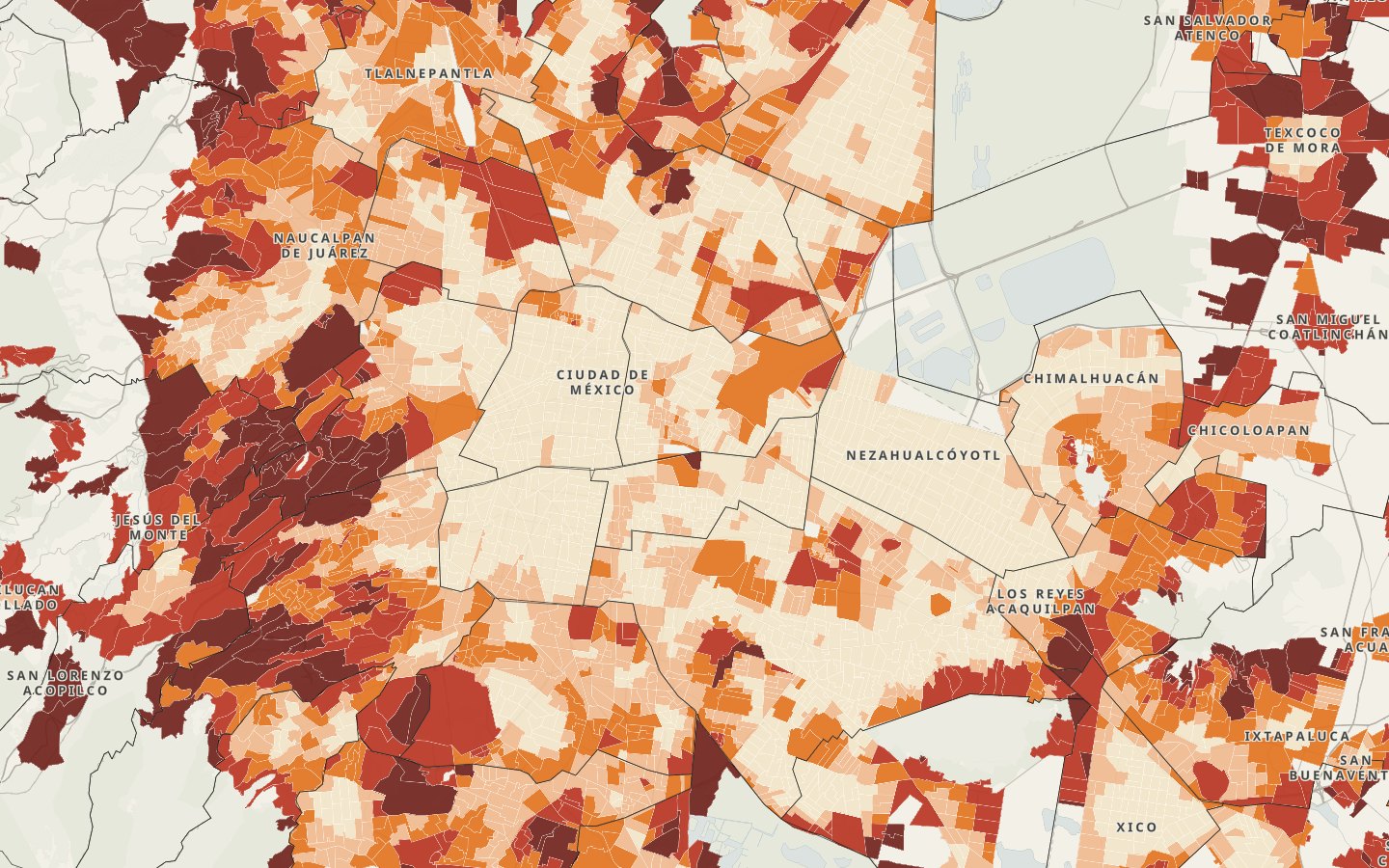
Measuring the distance along the street to what a person uses every day, with the same yardstick as in Mexico and Colombia, shows which neighborhoods are close to everything and which ones lack what.
What we found
The center and the coast are close to everything; the west and north are not
The index reaches 70.4 in the Centro municipality and 66.7 in Pocitos, and drops to 39.9 in Colón and 34.7 in Maroñas. In Villa García, 91% of people are in the city’s lowest proximity quintile.
What is missing nearby is culture and health care
Food, school, recreation and a bus stop are less than fifteen minutes away on foot for more than 96% of people. Culture is farther away for 39% and health care for 24%.
The stop is close; the frequency depends on the neighborhood
53% of people have a stop within 300 m with 20 or more buses an hour at peak; 12% have no stop or fewer than 4. In the Centro and Pocitos municipalities the first group is 88% to 90%; in Piedras Blancas, 62% of people have fewer than 4 buses an hour or no stop at all.
It matches the city government’s own measurement
Zone by zone, the distances rank much like those published by the Intendencia: rank correlation of 0.68 for transit, 0.64 for education, 0.51 for food and 0.47 for recreation. The differences come from the destination inventories.
What is missing changes from one municipality to another
In the Casavalle, Malvín and Maroñas municipalities the most distant function is culture; in Colón, education; in Cerro, food; in Centro and Prado, recreation, and in Pocitos, transport.
From 240 m to almost a kilometer
Median street distances are 240 m to transport, 259 m to recreation, 308 m to food, 462 m to education, 798 m to health care and 985 m to culture.
Dense and distant, close and empty
62,870 people live in dense areas with low proximity and 61,883 in areas with high proximity and few people.
See it on the map
What we recommend
Prioritize polyclinics and neighborhood cultural facilities in the Maroñas, Colón, Cerro and Casavalle municipalities, and raise bus frequency where there is a stop but fewer than 4 buses an hour, as in Piedras Blancas and Paso de la Arena.
Montevideo has almost everything close by; what separates the coast from the edge is culture, health care and bus frequency.
Proximity index by census zone, bus frequency by stop, and comparison with the Intendencia’s measurement · Montevideo, Uruguay · 2026
Facing a similar problem?
We can run this analysis for your city, with your data and your question.
Relevant for
- Mobility and planning departments
- Road-safety and school-mobility programs
- Care and social-development programs
- International organizations and funders