Back to Land and Urban Regulation
Tourist housing does not follow proximity
It follows the historic center: 37% of the six cities’ tourist dwellings are less than 1 km from the center, where 7% of all dwellings are.
Tourist housing does not follow proximity · Spain · Is tourist housing taking over the neighborhoods with the most everyday life nearby?
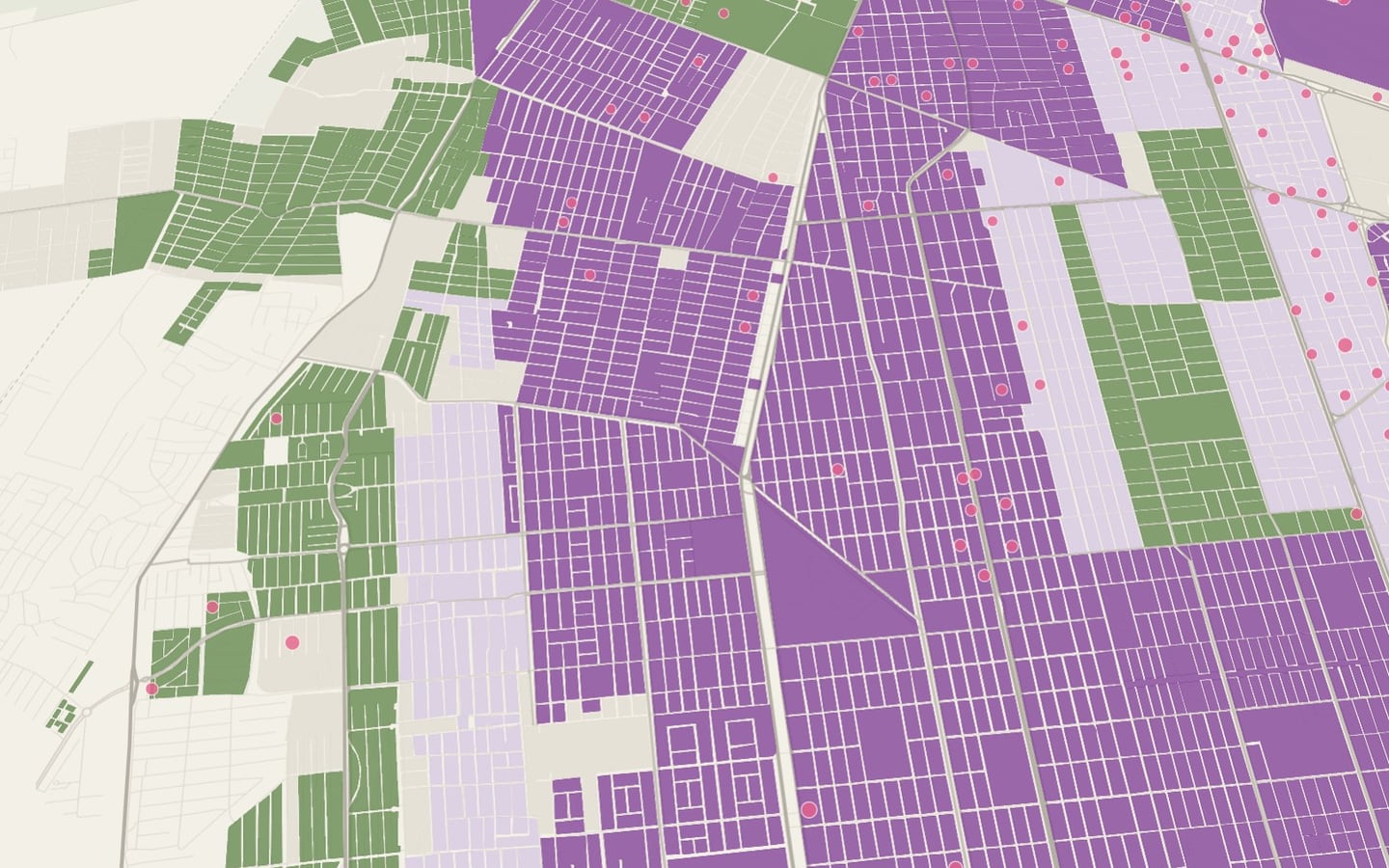
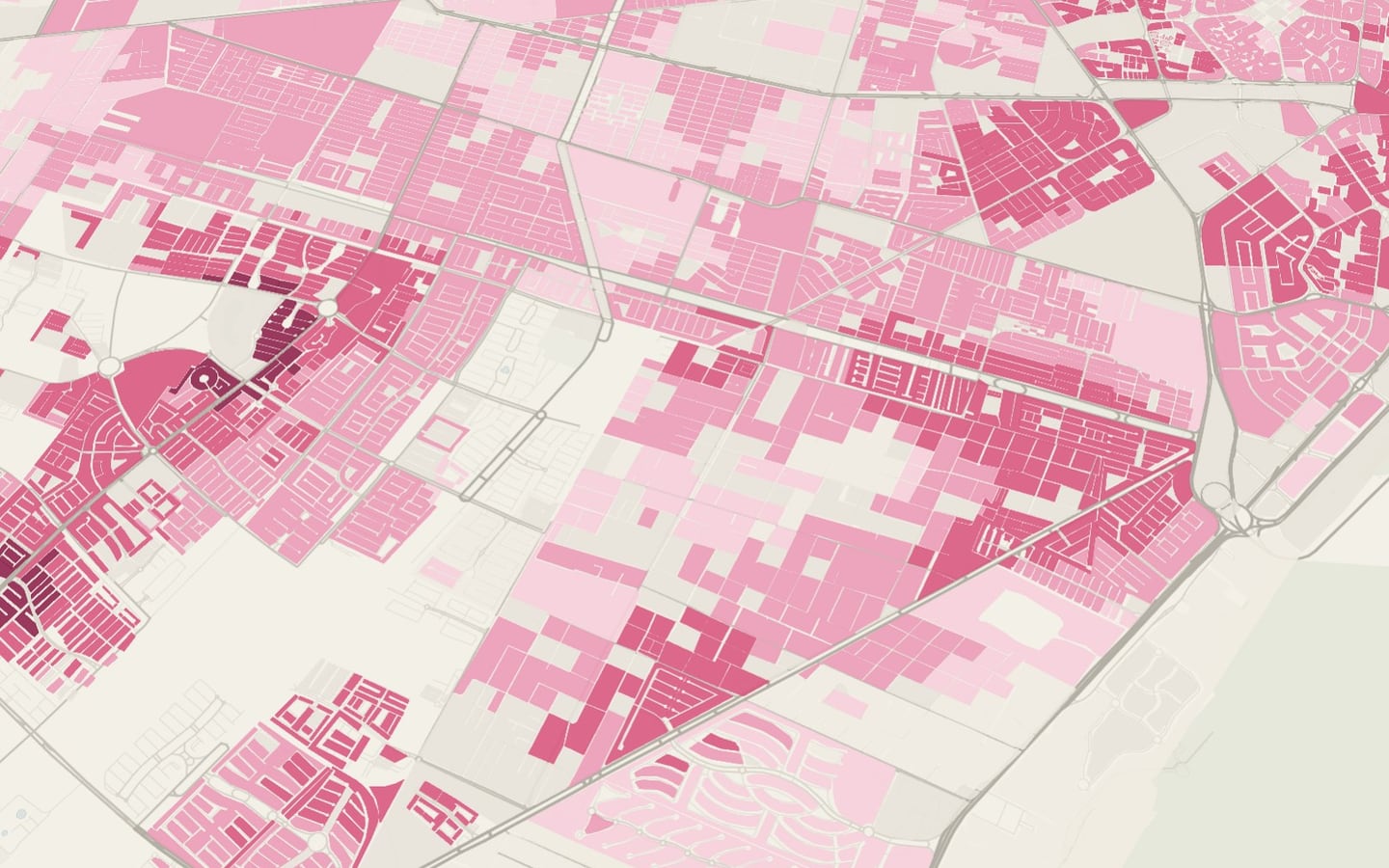
INE tourist housing counts from 2020 to 2026, SERPAVI declared rents and the Annual Census population, crossed section by section with the Everyday Proximity Index in Madrid, Barcelona, Valencia, Zaragoza, Seville and Málaga. Tourist housing follows the historic center, not proximity: at the same distance from the center, the index adds nothing. Rents rise at almost the same pace across the whole city, and the touristic sections are not emptying: what changes is who lives in them.
Read the technical noteThe first two pages, online. The full note is sent by email on request.
The problem
If the neighborhoods with the most shops, schools, health care and transport within walking distance were the ones turning into tourist housing, the proximity the index measures would also be what is being lost. We crossed the two, section by section, in Spain’s six cities of more than 500,000 people.
What we found
Tourist housing is in the historic center
Across the six cities, 37% of tourist dwellings are less than 1 km from the historic center, home to 7% of all dwellings. By city, the share ranges from 24% (Barcelona and Valencia) to 56% (Zaragoza).
At the same distance from the center, proximity adds nothing
Once distance is accounted for, the correlation between the proximity index and tourist intensity is between −0.06 and 0.06 in five cities and −0.16 in Málaga. Neighborhoods with plenty of everyday life nearby, outside the center, have little tourist housing.
Rents rise at almost the same pace across the city
From 2019 to 2024 the median declared rent rose by 16% in Barcelona and by 40% in Valencia; the gap between the proximity quintile with the largest rise and the one with the smallest is between 1.3 and 3.7 points.
Touristic sections are not emptying; who lives in them is changing
In the center, the most touristic sections did not lose more population than the rest, but the population of Spanish nationality fell more in four of five centers: in Madrid, by 4.6% against 1.7%.
Tourist housing goes with high rents, not with rising ones
In the center, sections with 5 or more tourist dwellings per 100 dwellings have higher rents (11.0 against 8.9 €/m² in Málaga; 10.8 against 9.5 in Seville), but rents there rose somewhat less than in the rest of the center in four cities.
A third of the dwellings in the touristic center were not a primary residence
In 2021, 37% of the dwellings in the most touristic sections of Valencia’s center were not a primary residence, as were 36% in Seville, 32% in Málaga and 31% in Barcelona, against between 16% and 23% in the rest of the center.
The 2022 to 2024 wave grew more outside the center
In Madrid, Seville and Valencia, tourist housing grew more between 3 and 5 km from the center than in the center itself: in Madrid, by 65.4% against 33.6%.
See it on the map
What we recommend
Treat the two problems separately: tourist housing where it concentrates, in a few dozen sections of the historic center and, in Valencia, of the seafront; and rents as a problem for the whole municipality, because they rise at the same pace in every proximity quintile.
Tourist housing does not chase everyday life nearby: it chases the historic center. Rents rise across the whole city.
Section-level cross-reading of tourist housing, rents and population against the proximity index · Madrid, Barcelona, Valencia, Zaragoza, Seville and Málaga, Spain · 2026
Facing a similar problem?
We can run this analysis for your city, with your data and your question.
Relevant for
- Planning institutes and departments
- Municipal governments and councils
- Developers and real estate funds
- Firms that prepare plans