Back to Mobility and Accessibility
11 out of 100 match
The crossings Bogotá should improve first change with the question: spatial justice, universal accessibility or road safety.
Safe Crossings · Bogotá · Where should Bogotá improve first among the 6,371 crossings of its main network?
A model to decide which crossings on Bogotá’s main network to improve first, according to three policy questions. Of the 100 priority crossings for spatial justice, only 11 are also priorities for road safety; across 231 ways of distributing the weights, only 2 crossings are always among the top 100.
Read the technical noteThe first two pages, online. The full note is sent by email on request.
The problem
There are more crossings to address than budget, and the priority changes depending on whether it is seen from spatial justice, universal accessibility or road safety. We applied the Cancún Safe Crossings method to Bogotá with public data from the District.
What we found
Which crossings come first depends on what you want to protect
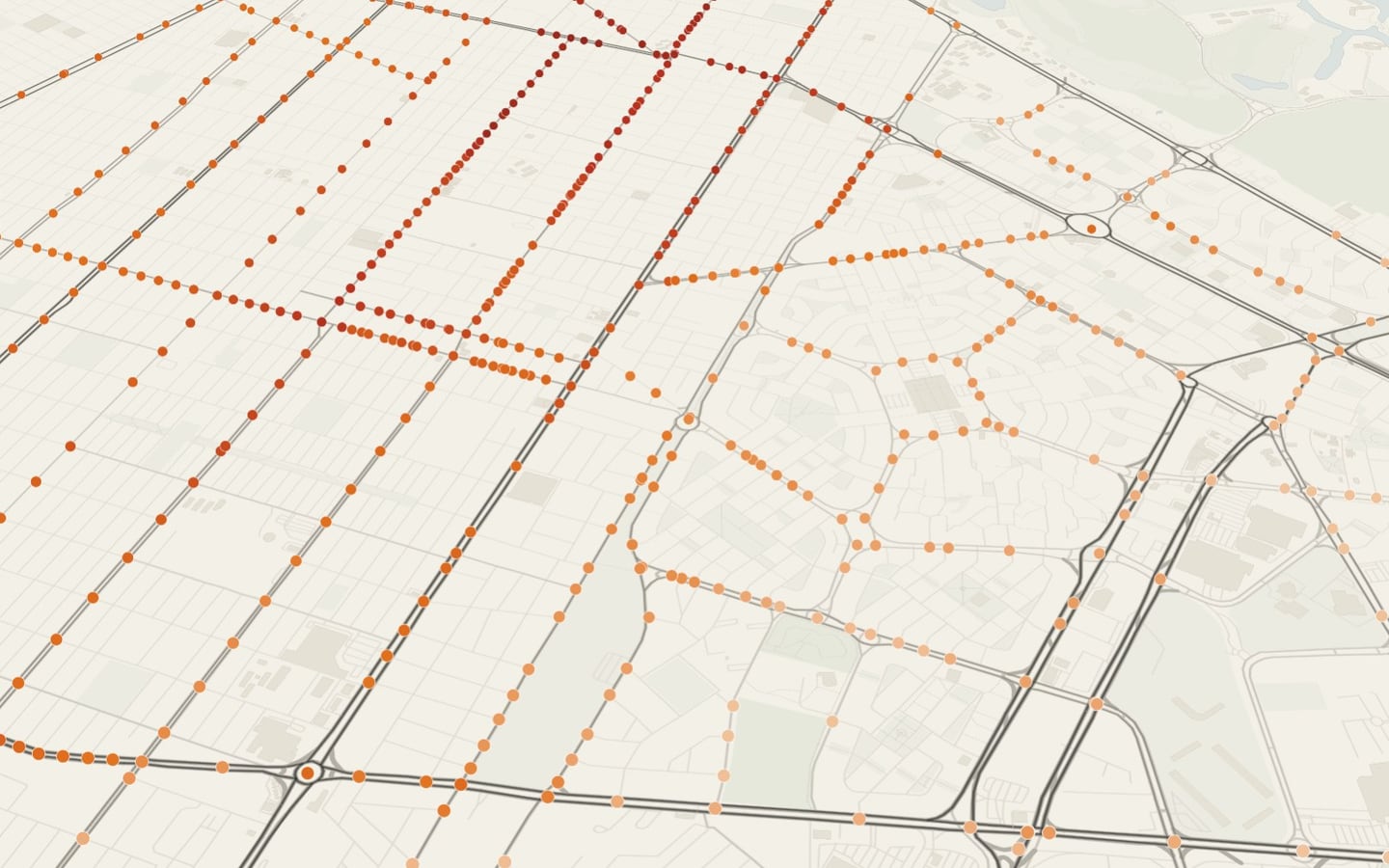
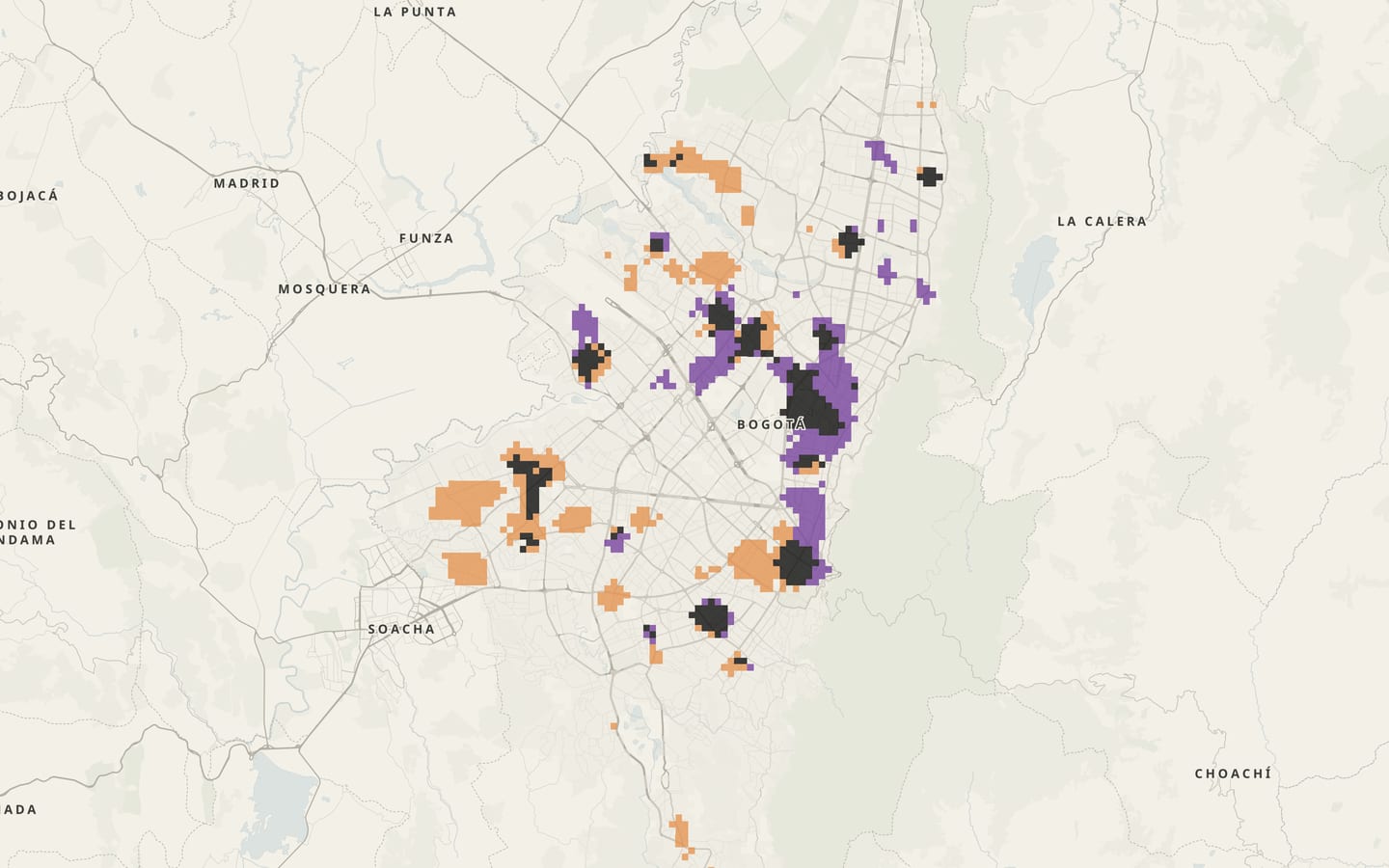
We ranked the 6,371 crossings with three models. Of the top 100 for spatial justice, which weighs most where the most excluded population lives, only 11 are also among the top 100 for road safety, which weighs crashes most. With universal accessibility, which weighs children and older people most, they share 66. Choosing the criterion means choosing the list.
Almost no crossing is a priority under every weighting
We tested 231 combinations of weights among the indicators. Only 2 crossings stay among the top 100 in all of them; 247 enter the list at least once. The priority depends heavily on the weights, so they should be set explicitly before the list is drawn up.
Kennedy appears on every list
About half of each list of 100 crossings is in the locality of Kennedy. The crossings on each list also cluster in a few zones: 12 on the spatial justice list and 27 on the road safety list. That makes it possible to plan improvements by zone that address several crossings at once.
Counting pedestrian crashes is not enough to decide where to act
Of the 50 crossings with the most pedestrian crashes recorded between 2015 and 2021, 27 do not appear on any of the three priority lists, for example Avenida Caracas at calles 21 and 22. No model rests on crashes alone: population, services and transit around each crossing also count. The points with the most pedestrian crashes need a list of their own.
Each list protects different people
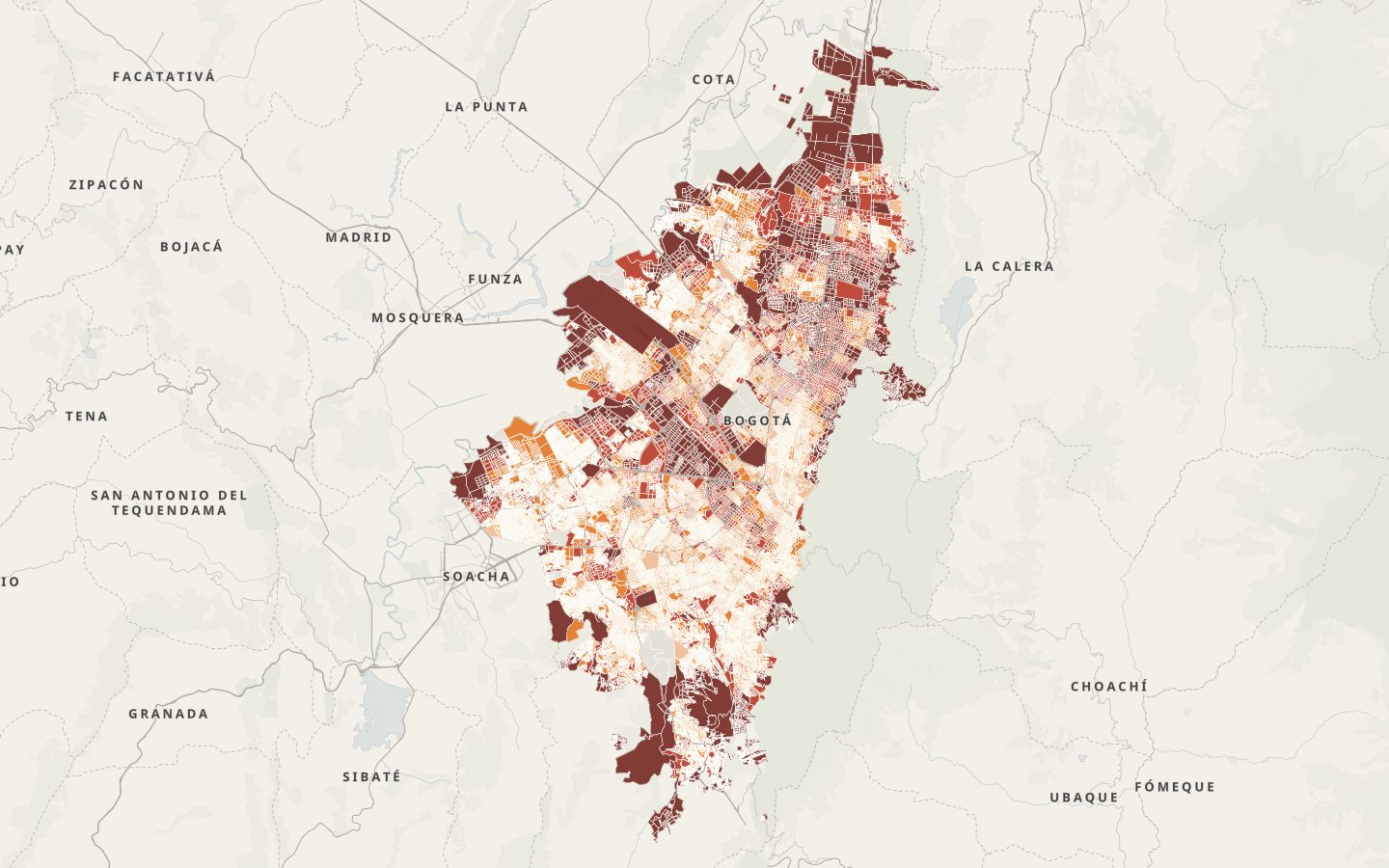
The 100 road-safety intersections add up to 502 fatal crashes within 100 m, five times those on the spatial-justice list (97). The spatial-justice intersections have, at the median, 98.9% of homes in strata 1 and 2 and about 11,300 people under 20 within 500 m; the road-safety ones, 74.5% and 6,500.
Two intersections are priorities under any weighting
Only Calle 75 Sur at Carrera 14 (Usme) and Avenida Carrera 86 at Calle 1 Sur (Kennedy) stay in the top 100 under all 231 weight combinations; 247 intersections make it under at least one. In Cancún the figures were 6 and 249.
The road-safety list depends most on the records
Without the crashes whose coordinates repeat 50 times or more, 87 of the 100 road-safety intersections remain; the spatial-justice and universal-accessibility lists do not change.
See it on the map
What we recommend
Set the policy weights in writing before drawing up the list, and intervene by zone: the 100 spatial-justice intersections fall in 12 zones and the road-safety ones in 27, so several intersections can be addressed at once. Add a separate list of pedestrian collisions for the city center, which none of the models captures.
Setting priorities is a policy decision: the model makes it explicit and repeatable; it does not replace it.
More from this project Safe Crossings · Cancún
Construction of the crossings, indicators, multi-criteria models, sensitivity test and map narrative · Bogotá, Colombia · 2026
Facing a similar problem?
We can run this analysis for your city, with your data and your question.
Relevant for
- Mobility and planning departments
- Road-safety and school-mobility programs
- Care and social-development programs
- International organizations and funders